About
This website is my personal space for pontificating about things. My perspective is one of an academic who has both an unusual career profile (I have spent time running facilities) and an interdisciplinary perspective (I am a climate scientist who has done enough computing to have spent a bit of time moonlighting as a computer scientist).
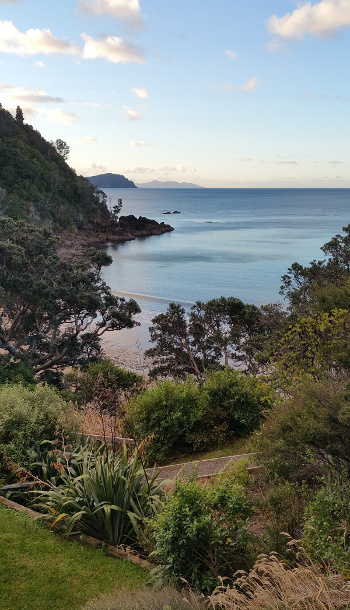
- A winter's day in Godzone
Nowadays I am a Senior Scientist in the UK National Center for Atmospheric Science (NCAS), based in the University of Reading. I am responsible for the strategic direction of, and the research funding for, the NCAS Computational Model Servcies (CMS) group. CMS develop, deploy, and support climate models for the UK academic community - with activities ranigng from developing data tools, workflow, and deep engineering for high peformance computing (HPC); all alongside direct involvment in a range of research projects.
My own research interests currently focus on data standards and delivery systems, land-surface modelling, the impacts of aerosol on regional climate change, and next generation high resolution modelling (including interesting new configurations of ocean/atmosphere models). (Anyone claiming the word “focus” didn’t belong in that sentence is probably right!)
History
I grew up in Napier, NZ, and began my academic career with a doctorate from the University of Canterbury, in Christchurch New Zealand, where I worked on middle atmosphere dynamics, utilising radar and satellite observations. During the last years of my studies, I partially funded myself with employment as a graphics and network consultant (and in that role was the leader of the team who brought the Internet to the South Island of New Zealand).
I then went to the University of Oxford in the UK, initially as a post-doc, then as a research fellow in a joint position between Lady Margeret Hall, Oxford Physics, and Rutherford Appleton Laboratory. Most of this time was also spent on middle atmosphere dynamics, mainly with satellite observations, but increasingly with model tools, such as the Stratosphere-Mesosphere Model. I did a lot of computer systems administration!
I went back to the University of Canterbury in 1996 as a Lecturer, then Senior Lecturer in Physics, where I began my interest in climate modelling, with work on gravity wave and clouds in climate models (alongside lots of interesting teaching). Started a migration from running computers to doing computer science.
I returned to the UK in 2000, to take up a role as “Head of the British Atmospheric Data Centre” at the Rutherford Appleton Laboratory, a role that eventually morphed into “Director of the Centre for Envrionmental Archival” (CEDA) within NCAS. I learnt a lot about Software Engineering. With the advent of JASMIN CEDA itself changed it’s role and the final A became A for Analysis. At roughly the same time I moved to a chair in “Weather and Climate Computing” at the University of Reading, but retained a 20% footprint at CEDA. In the new role I took a much higher profile in the provision of HPC for environmental science, and in the development of climate (and weather) modelling technology, from storage to codes.
In 2017 I finally relinquished the formal footprint at CEDA. This change was intended to relinquish time so that I could get more involved in important aspects of research on the transition to exascale computing.
Amongst other things I now have a major role in coordinating UK and European climate modelling programmes and infrastructure, via the UK National Climate Science Partnership and the European Network for Earth Simulation (UNNCSP and ENES respectively).
Sadly, with all this going on, my blog is quite moribund, but who knows, I may get back writing again soon, I keep promising myself I will find time …
Important Notice

- The Best Club Rugby Team in the World
Every page on this blog carries an important disclaimer: nothing written here carries any approval or authority associated with my employment. These are personal thoughts, and occasionally they will stray into opinion and frustration. Some pages will be about work done, and results, and some will be about things I am learning, and some will be about difficulties in delivering science. Some are about management. Some will be nothing to do with my professional life. I will endeavour to make it clear when I know I have strayed past professional competence, but you will have to make up your own opinions on that.